Stick packs & sachets
Review the number of units, their filled dimensions and the arrangement inside the carton.

CUSTOM PRINTED OUTER PACKAGING
Built around the contents.
Matched to the way you pack.
Bring stick packs, pouches, bottles or product kits together in a printed outer box. Choose the loading method, carton structure and paperboard together.
Carton quantities, tooling and production timing are confirmed for your project.
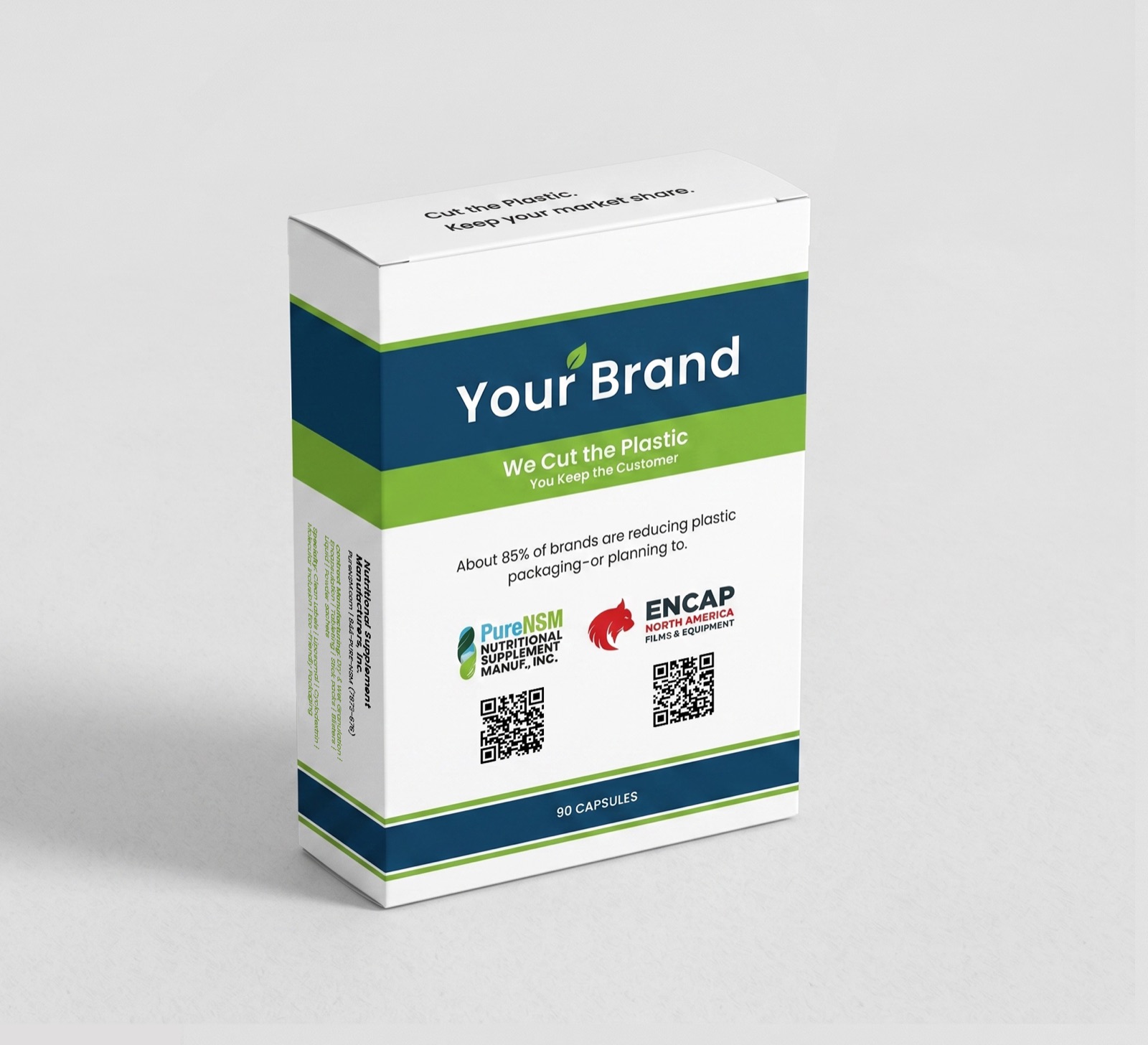
START WITH WHAT GOES INSIDE
Review the number of units, their filled dimensions and the arrangement inside the carton.
Allow for the filled pack, caps or closures, handling clearance and any insert needed to hold it in place.
Share the full contents and packing sequence so the structure can be reviewed as a complete pack.
CHOOSE THE PACKING WORKFLOW FIRST
A carton that is easy to fill by hand is not automatically ready for a cartoning machine. The structure and board need to work with the actual packing process.
MANUAL PACKING
Consider hand packing when arranging mixed kits, developing a launch or changing formats frequently. Review the assembly steps, handling effort and required output.
Review: Ease of opening, number of folding steps, packed weight and how securely the base holds the contents.
MACHINE PACKING
Specify the carton around the selected line. End-load, top-load and wraparound systems handle the pack differently; machine closure can use tuck or glue systems.
Review: Machine model, approved dieline, feed orientation, board caliper, grain direction, crease quality and opening force. Evaluate production-representative samples on the intended line.

SEE HOW THE PACK WORKS
The dieline defines the structure. The packing process erects, loads and closes it.

THE CLOSURE IS PART OF THE DESIGN
These are common structures to discuss, not a list of universally interchangeable boxes. Confirm the dieline, board, packed load and packing method together.
Top and bottom flaps tuck into the body. Straight and reverse tuck styles differ in flap orientation.
Discuss: Hand packing or a compatible machine, opening direction and flap clearance.
A pre-glued base forms as the flat carton is squared up, reducing separate bottom-folding steps.
Discuss: Fast erection, base engagement and the actual packed load.
Bottom flaps are folded and interlocked in sequence. This differs from a pre-glued auto-bottom.
Discuss: Manual or suitable semi-automatic assembly and the steps needed to secure the base.
End flaps are closed with the specified adhesive system rather than relying on a tuck closure alone.
Discuss: The closing equipment, adhesive, flap layout and bonding areas.
BALANCE APPEARANCE, STRENGTH & HANDLING
Compare these common paperboard families, then confirm the available grade for your project. A white surface alone does not identify the fibre composition or performance.
BLEACHED FIBRE
Solid bleached paperboard uses bleached chemical pulp and provides a white base for printed graphics. Coated faces and grade details vary.
Compare: Print appearance, inside colour, caliper, stiffness and the selected finishing process.
MULTILAYER PAPERBOARD
Folding boxboard combines a mechanical-pulp middle with bleached chemical-pulp layers. White-back and cream-back grades are available in the market.
Compare: Bulk, stiffness, back shade and crease performance using the actual grade data.
RECYCLED-BOARD FAMILIES
Coated recycled board and white-lined chipboard are families of recycled-fibre board. Names and constructions differ between markets and grades.
Compare: Actual recycled content, face and back colour, caliper, strength and intended use.
UNBLEACHED FIBRE
Unbleached board can give a natural brown appearance. Coated unbleached kraft (CUK) can pair a coated print face with a brown back.
Compare: The actual grade, print surface, colour treatment and strength needed for the contents.
GRAMMAGE · g/m²
GSM describes the board’s mass per unit area. A higher number alone does not guarantee a better carton or better machine performance.
CALIPER · THICKNESS
Specify thickness alongside stiffness, grain direction and crease design. Boards with the same GSM can behave differently.
Swatches illustrate board families, not exact layer thicknesses or production specifications. For direct product contact, share the intended use so the complete material and finish can be reviewed.
TURN THE STRUCTURE INTO YOUR PACK
Our carton manufacturing partner’s presentation shows printing and conversion capabilities. The selected board, artwork and structure determine the process for your order.
Discuss offset printing, varnish and UV effects, film lamination, foil stamping and embossing. Confirm colours and surface feel with suitable proofs or samples.
Die-cutting, creasing and folder-gluing turn the printed sheet into the agreed carton. Review glue areas, folds and finishing layers together.
Review print, die-cut alignment, folding and glue quality alongside filled-pack fit. A visual mockup is not a machine acceptance test.
YOUR PACKAGING CHOICES
Choose the structure first, then the print surface and finishing sequence.
Gloss coated paper and matte coated paper offer different print surfaces. Discuss these for printed wraps or inserts; do not equate a coated sheet with a specific carton-board grade.
White card and white-faced grey-back board provide different face and reverse appearances. Confirm the actual grade, caliper and crease performance.
Brown kraft and white kraft create different background colours for artwork. Confirm the print surface and suitable board or wrap construction.
Gold/silver card and pearlescent paper offer decorative surfaces. Review colour proofs and folding behavior on the actual material.
Greyboard supports wrapped rigid-box constructions; corrugated board uses a fluted structure. These are separate constructions from a folding carton.
Specialty paper and translucent tracing paper can be discussed for wraps or presentation layers. Uncoated offset, lightweight coated paper and woodfree paper are also listed as general print-paper references, not interchangeable carton boards.
CMYK process printing, spot-colour printing and screen printing. Specify colour targets and review proofs on the actual paper.
Embossing/debossing, texture embossing and flocking create different tactile effects. Review depth, placement and how the finished panel will fold.
Spot UV, reverse UV, reverse frosting, gloss/matte film lamination, varnishing and glitter treatments. Compare a physical finish sample and coordinate folds and glue areas.
Gold/silver hot foil and edge painting add accents. Confirm foil colour, minimum detail and alignment with print or embossing.
Die-cutting defines the outline; dotted/perforation lines create a controlled tear or fold feature as specified. Keep these distinct from structural crease lines on the approved dieline.
The supplied paper-and-process presentation is a general reference. It does not establish that every option is available from the carton manufacturer. Confirm board grade, decoration, direct-contact use, tooling, samples and quotation as one specification.
START WITH THE INFORMATION YOU HAVE
No finished specification yet? Start with the contents and packing plan.
Minimum quantities, tooling, sample arrangements, materials and production timing are confirmed in the carton quotation.
BEFORE YOU FINALIZE THE BOX
No. It describes a pre-glued base that forms when the carton is squared up. It can make hand erection easier. Machine suitability depends on the complete structure and equipment.
Potentially, if the structure, material and closing method suit both workflows. Confirm the machine requirements before fixing the dieline, and evaluate production-representative cartons on the intended line.
Not by GSM alone. Board grade, caliper, stiffness, grain direction, crease quality, contents and packing method all affect the result.
No. Those are rollstock terms. Carton quantities, tooling and timing are confirmed separately for the chosen board, structure and artwork.
No. A carton needs its own confirmed dieline, including cut lines, folds, glue areas and artwork allowances. Share your current drawing or request the layout for the agreed carton.
These independent manufacturers explain general material and equipment principles; their product specifications are not Encap’s supply terms.
ONE PRODUCT. COORDINATED PACKAGING.
Tell us about the primary pack and the carton around it.